New vs Used Fire Extinguishers from China: The Real Cost of a 40ft Container to Jebel Ali
A used 6 kg extinguisher costs roughly 60% less than a new one at the factory gate. Load both into the same 40ft container, ship them from Shenzhen to Jebel Ali, pay duty and VAT, and that gap does not survive. Depending on where the units are refilled, the used container can land 29% cheaper — or 33% more expensive — than the new one. This is the arithmetic behind that swing.

What this article covers
- The one number that decides everything
- Container maths: what a 40ft really holds
- The four cost lines that separate new from used
- Full cost breakdown: 2,400 units to Jebel Ali
- Landed cost per unit — the verdict
- The refill trap: why the cheapest FOB loses
- Where new extinguishers win
- Where used extinguishers win
- Which option fits which buyer
- The UAE compliance gate
- Pre-shipment checklist
- FAQ
1. The one number that decides everything
Almost every quotation you will receive from a Chinese supplier is quoted FOB. That is a factory-gate number: it tells you what the goods cost before a container is booked, before duty is assessed, and before anyone has checked whether the units will still be serviceable when they reach your warehouse in Al Quoz.
The number that actually determines whether a deal makes money is landed cost per serviceable unit — total cash out of your account, divided by the number of extinguishers you can legally put into service or resell the day the container is devanned.
Those two numbers are not proportional. On a 40ft container of 6 kg dry powder units shipped Shenzhen → Jebel Ali, the FOB spread between new and used is about 60%. The landed spread is anywhere between −29% and +33%, because four cost lines behave differently for the two products:
- Dangerous goods status — a charged extinguisher is UN1044 Class 2.2; an empty one is general cargo.
- Container yield — the same 40ft holds the same count either way, but not the same weight.
- Ad valorem duty — 5% of CIF, so a cheaper container pays less duty. This helps used units.
- Destination refill capacity — the line that quietly reverses the whole calculation.
Read those three figures again in order. The dangerous goods premium that everyone worries about is the smallest of the three. The refilling location is the largest by a factor of four.
2. Container maths: what a 40ft really holds
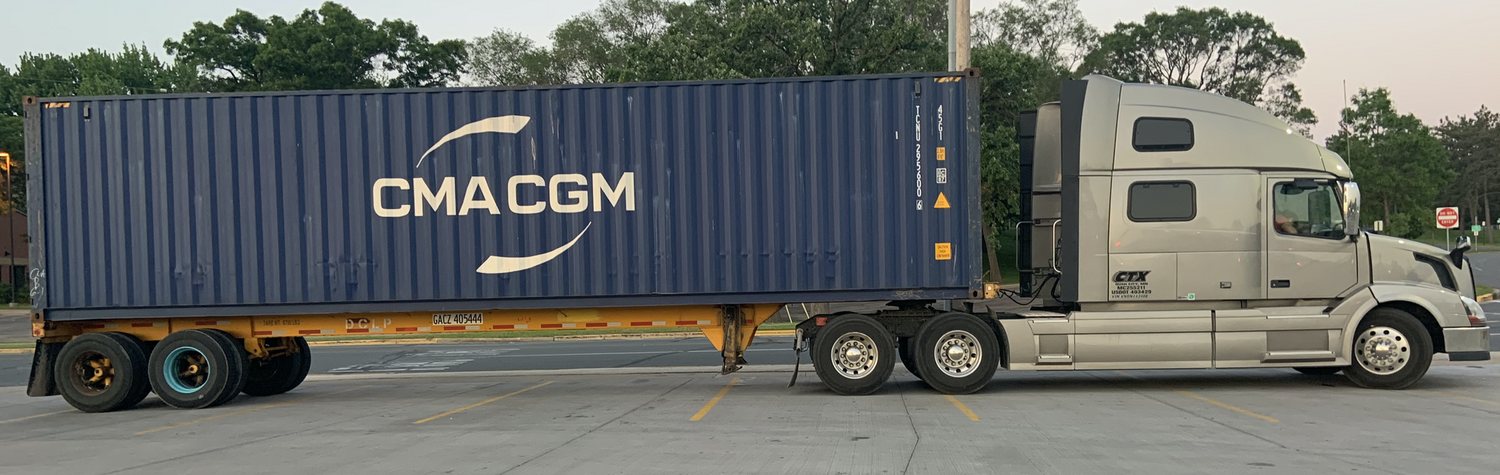
A 40GP gives you 67.7 m³ and about 26,580 kg of payload. A 40HQ adds 8 m³ of height but almost no payload. Extinguishers are dense, so the container is weight-limited, not volume-limited — which is why a 40HQ buys you nothing here and a 40GP is the right box.
| Product | Gross weight / unit | Units per 40GP | Payload used | Limiting factor |
|---|---|---|---|---|
| 4 kg ABC dry powder | 6.5 kg | 3,400 | 83% | Payload |
| 6 kg ABC dry powder | 9.0 kg | 2,400 | 83% | Payload |
| 9 kg ABC dry powder | 13.0 kg | 1,700 | 83% | Payload |
| 12 kg ABC dry powder | 17.0 kg | 1,300 | 83% | Payload |
| 50 kg trolley unit | 85 kg | 260 | 83% | Payload |
Planning figures at 83% payload utilisation, which leaves room for pallets, dunnage and correct weight distribution. Volume utilisation for the 6 kg line is only about 48% — you are paying for weight, not space.
The rest of this article uses 2,400 units of 6 kg ABC dry powder as the reference load, because that is the size most Gulf importers actually buy and because it is the worst case for the used-unit argument (the heavier the product, the more the weight penalty bites).
Why this matters for used units. An empty cylinder weighs roughly 3.6 kg against 4.2 kg charged. In a weight-limited container that extra 0.6 kg per unit is worth about 160 additional units per load — one of the few genuine advantages of shipping empties, and worth roughly USD 900 of freight on a full container.
3. The four cost lines that separate new from used
3.1 Dangerous goods status: UN1044, Class 2.2
A charged fire extinguisher contains compressed or liquefied gas and is classified UN1044, Class 2.2 (non-flammable, non-toxic gas) under the IMDG Code. That classification triggers four things:
- A dangerous goods surcharge from the carrier — typically USD 435 per 40ft for Class 2.2, against USD 220 for a 20ft.
- A packaging certificate (the Chinese 危包证, or a cylinder inspection report as an accepted substitute), plus an English MSDS.
- A DG declaration filed before the vessel cut-off, with the cargo booked as UN1044 by name.
- Shipside direct loading at Yantian — the container cannot sit in the normal yard stack, so it is trucked in after the vessel berths and lifted straight on. That is an extra handling charge and a much tighter cut-off.
An empty, unpressurised cylinder is not dangerous goods. It ships as general cargo under the same HS heading, with no DG surcharge, no DG declaration and no shipside loading constraint. On a single container that is worth about USD 935 — real money, but only 3.3% of the landed value of a new-unit load. It is not the reason the two options diverge.
3.2 Origin charges
Inland trucking from the factory to Yantian, export declaration, terminal handling and documentation are effectively identical for both products: roughly USD 445 per container. The only difference is the DG line described above.
3.3 Ocean freight
Shenzhen → Jebel Ali on a 40GP currently prices somewhere between USD 1,800 and USD 3,800 port-to-port depending on season, carrier and how far ahead you book; USD 2,400 is a reasonable planning midpoint for an off-peak booking. Transit is 18–22 days port-to-port, 25–32 days door-to-door with clearance.
Crucially, freight is per container, not per unit. It is identical for new and used goods, apart from the DG surcharge. A freight spike therefore moves every scenario by roughly the same amount per unit and does not change the ranking — a point worth remembering next time a forwarder's spot rate makes the news.
3.4 Duty and VAT: the line that favours used units
Fire extinguishers enter the UAE under HS 8424.10. GCC duty is 5% of CIF (goods + origin charges + freight + insurance), and VAT is 5% on CIF plus duty. Both are ad valorem, so a container worth USD 12,000 pays less than half the duty of one worth USD 26,000.
- Duty is a real, non-recoverable cost.
- VAT is recoverable if you are VAT-registered, but it is still cash out of the account at clearance, and it scales with the invoice value.
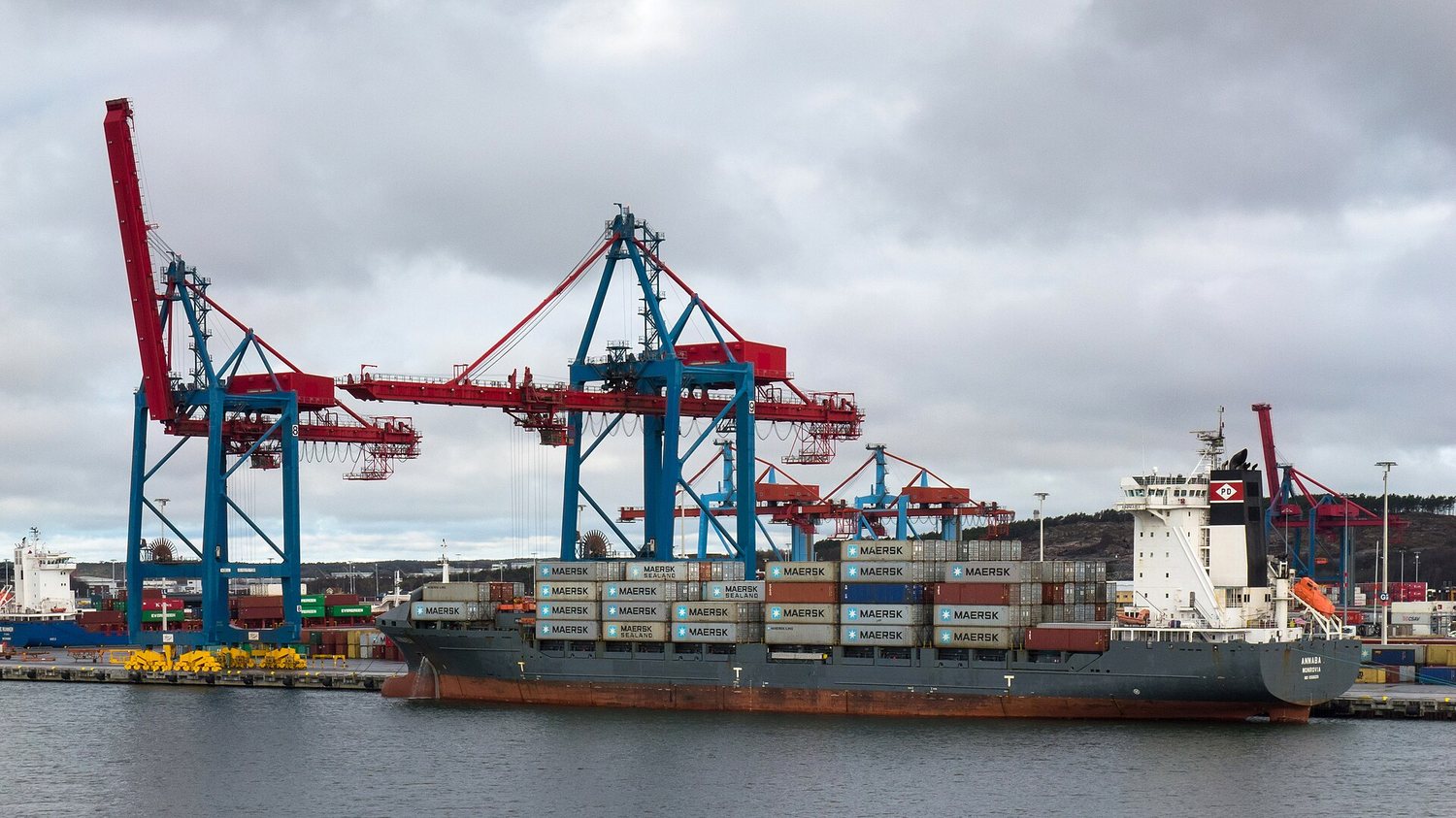
4. Full cost breakdown: 2,400 × 6 kg units to Jebel Ali
Three purchase routes for the same physical load. All figures in USD. FX assumed at USD 1 = RMB 7.15 = AED 3.6725.
| Cost line | A. New, charged & certified |
B. Used, refurbished & charged in China |
C. Used, empty (non-DG) |
|---|---|---|---|
| Unit FOB price | 9.50 | 6.20 | 3.80 |
| Goods, 2,400 units FOB | 22,800 | 14,880 | 9,120 |
| Inland trucking, factory → Yantian | 168 | 168 | 168 |
| Export declaration | 56 | 56 | 56 |
| Origin THC + documentation | 221 | 221 | 221 |
| DG packaging cert, DG declaration, shipside loading | 500 | 500 | 30 |
| Ocean freight, 40GP Shenzhen → Jebel Ali | 2,400 | 2,400 | 2,400 |
| DG surcharge, IMO Class 2.2 | 435 | 435 | — |
| Marine insurance, 0.35% of CIF | 93 | 65 | 42 |
| CIF value | 26,673 | 18,725 | 12,037 |
| Import duty, 5% of CIF | 1,334 | 936 | 602 |
| Destination THC + delivery order | 395 | 395 | 395 |
| Customs broker, Mirsal 2 declaration | 95 | 95 | 95 |
| Delivery, Jebel Ali → Dubai warehouse | 245 | 245 | 245 |
| LANDED COST, EX-VAT | 28,742 | 20,396 | 13,374 |
| LANDED COST PER UNIT | 11.98 | 8.50 | 5.57 |
| vs. new (per unit) | — | −29.0% | −53.5% |
| VAT 5% on CIF + duty (recoverable) | 1,400 | 983 | 632 |
| Total cash out at clearance | 30,142 | 21,379 | 14,006 |
| Cash out per unit, incl. VAT | 12.56 | 8.91 | 5.84 |
Assumptions: 2,400 units of 6 kg ABC dry powder per 40GP; 83% payload utilisation; FOB prices are 2026 factory-gate ranges for B2B orders above 2,000 units, mid-point used; freight USD 2,400 port-to-port, off-peak; insurance 0.35%; duty 5%; VAT 5%; movement under FOB terms with the buyer appointing the forwarder. Figures are a planning model, not a quotation.
5. Landed cost per unit — the verdict
Route C looks unbeatable at USD 5.57 per unit. It is also incomplete, because an empty cylinder is not an extinguisher. It becomes one only after it has been recharged, hydrostatically tested, fitted with a serviceable valve and gauge, and tagged by an approved workshop. In the UAE, that work costs AED 30–45 per 6 kg unit — call it AED 38, or USD 10.35.
| Route | Landed / unit | Refill & test / unit | Serviceable cost / unit | vs. new |
|---|---|---|---|---|
| A. New, charged, certified | 11.98 | — | 11.98 | baseline |
| B. Used, refurbished & charged in China | 8.50 | — | 8.50 | −29.0% |
| C. Used, empty + refilled in the UAE | 5.57 | 10.35 | 15.92 | +32.9% |
| C′. Used, empty, sold as-is to a workshop | 5.57 | buyer's scope | 5.57 | −53.5% |
The spread between the best and worst serviceable outcome is USD 7.42 per unit, or USD 17,808 on one container. That is the entire commercial question in a single line.
The uncomfortable conclusion: buying used extinguishers to refill locally is the most expensive of the four routes. Buying them already refilled and certified in China is the cheapest. The 60% FOB discount is real; where you spend it decides whether you keep it.
6. The refill trap: why the cheapest FOB loses
Refilling a 6 kg dry powder extinguisher in China costs about USD 2.40. That covers 6 kg of ABC 40% MAP powder, a nitrogen charge to 1.2–1.5 MPa, a new valve seal, a pressure test, and a fresh label. Chinese refilling shops run at volume, powder is a commodity there, and labour is priced accordingly.
The same job in the UAE costs USD 10.35. Four things drive the difference: powder is imported and marked up, the workshop must hold Civil Defence approval (a licensed category, not a garage operation), every unit needs a compliance tag and paperwork trail, and volumes per workshop are far lower.
The gap between the two is USD 7.95 per unit. Compare that against the cost lines buyers usually negotiate hardest:
| Lever | Value per unit | Value per 40ft |
|---|---|---|
| Negotiating 5% off the FOB price (route B) | 0.31 | 744 |
| Saving the entire DG surcharge | 0.18 | 435 |
| Switching from 40HQ to 40GP | 0.00 | 0 |
| Refilling in China instead of the UAE | 7.95 | 19,080 |
Refilling location is worth 25 times more than a 5% price negotiation and 44 times more than eliminating the dangerous goods surcharge. Yet it is the line that appears in almost no quotation and almost no buyer's spreadsheet.
7. Where new extinguishers win
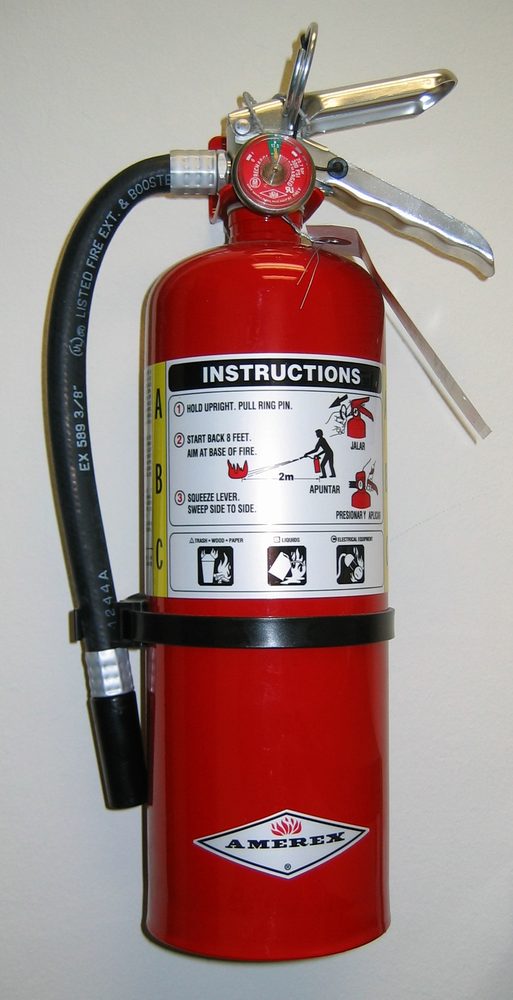
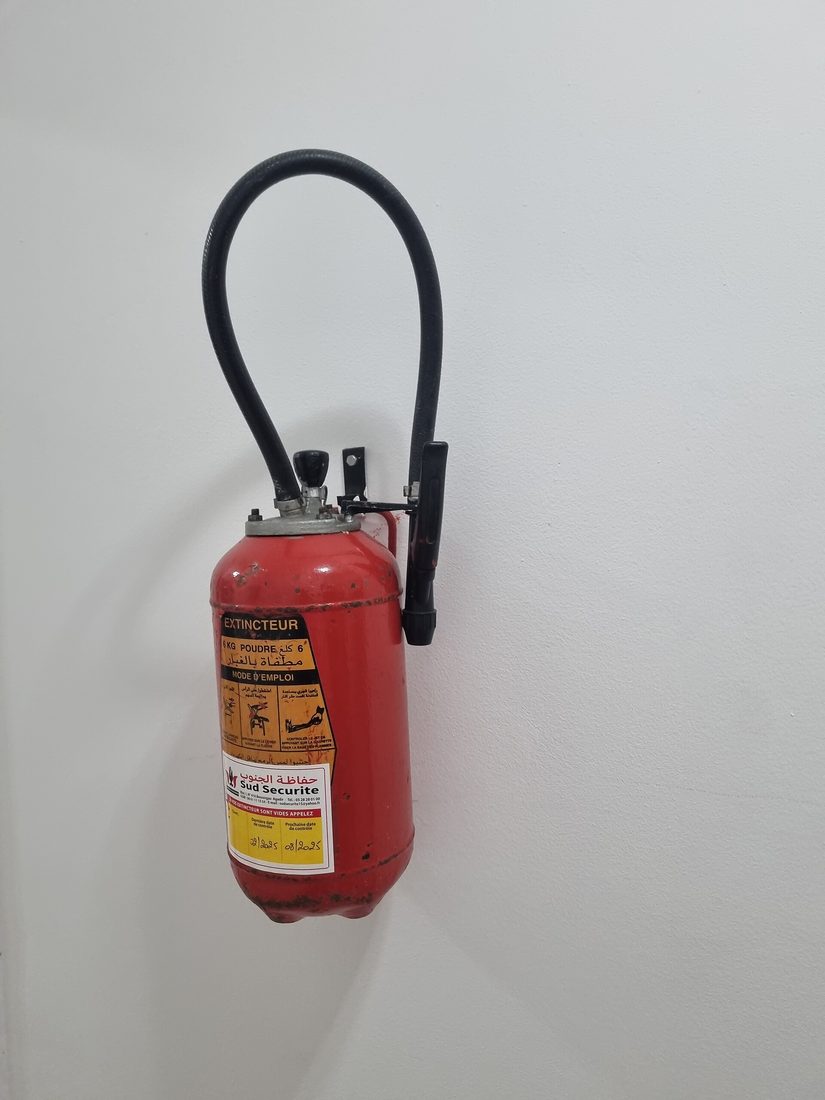
- It clears the compliance gate. A new unit carries a certificate of conformity issued against the manufacturer's model and factory. That certificate is the price of admission to project supply in Dubai and Abu Dhabi. Used units cannot inherit it — a CoC attests to production conformity, not to the condition of one cylinder.
- The service clock starts at zero. Hydrostatic test intervals are counted from the date of manufacture. A ten-year-old cylinder may have only one test cycle left in it, which caps its resale value regardless of how good it looks.
- Uniformity. One model, one label, one spare-parts kit, one training session. On a 500-unit building rollout, that is worth more than the unit-price difference.
- Warranty and recourse. 12–24 months against manufacturing defects, with a named supplier to claim against. Used stock is sold as-seen.
- Audit and insurance. Corporate fire-safety audits and insurers increasingly ask for the provenance of every unit. New stock answers that question in one document.
- Predictable reject rate. Effectively zero on arrival, versus 3–8% on used lots.
8. Where used extinguishers win
- Price, where price is the only criterion. At USD 8.50 landed and serviceable, a used-and-refilled unit undercuts new by 29% with the same extinguishing performance. For a construction site, a yard, a scaffolding store or a plant room, that is decisive.
- Availability. New production runs 25–40 days plus sailing. Estate disposals, hotel refits and portfolio replacements land in lots of 500–5,000 units of a single model, ready to load — and the container can sail in the same week.
- Lower duty and VAT outlay. Because both are ad valorem, route C ties up USD 632 of VAT against USD 1,400 for new — a real working-capital difference if you are clearing several containers a month.
- Feedstock economics for workshops. A Civil-Defence-approved refiller buying empty cylinders at USD 5.57 landed and charging AED 38 for the refill is running a 65% gross margin on the finished unit. This is the single most reliable use of used stock in the Gulf.
- Genuine circular-economy procurement. Several large UAE clients now score suppliers on embodied carbon. A refurbished cylinder avoids roughly 12–15 kg of steel production per unit — a defensible ESG line item, not just a cost line.
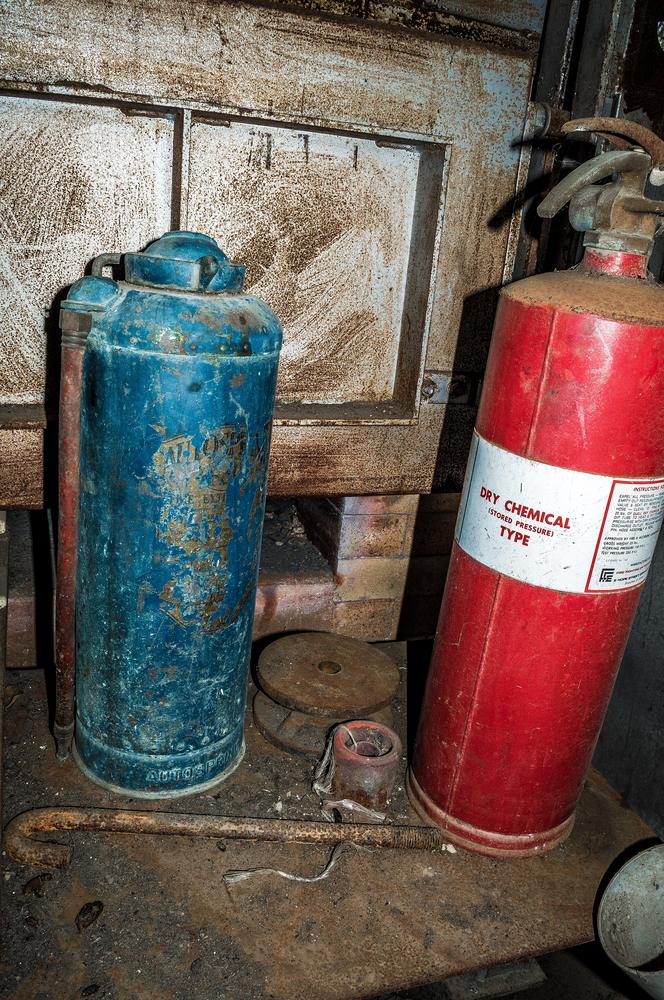
The honest counterweight: used lots carry a 3–8% cosmetic and functional reject rate, valve and gauge replacement on perhaps 15% of units, and cylinder-age risk. On a 2,400-unit load, a 5% reject rate is 120 units — about USD 1,000 of value at route B pricing, which is more than the entire DG premium. Inspect before you load, not after.
9. Which option fits which buyer
| Buyer profile | Best route | Reason |
|---|---|---|
| Distributor supplying projects, towers, hotels | A — new | Only new units carry a CoC tied to a listed model; project consultants will reject anything else. |
| Civil-Defence-approved refilling workshop | C — used, empty | Lowest landed cost per cylinder; refilling is their core business, so the USD 10.35 is already in their overhead. |
| Industrial plant, yard, construction site | B — used, charged | Non-regulated occupancy, performance-driven procurement, 29% cheaper with no local refill step. |
| Trader re-exporting to Iraq, Africa, Yemen | C or B | Destination has no UAE listing requirement; price and volume dominate. |
| Facility manager replacing 200 units a year | A — new | Small volume, uniform stock, audit trail, and the DG cost is immaterial at this size. |
| First order / trial shipment under 500 units | A — new, LCL | LCL dangerous goods is awkward but workable; splitting a used lot below FCL is rarely economic. |
10. The UAE compliance gate
Cost models are worthless if the container cannot be cleared and sold. Two regimes apply simultaneously in the UAE, and they are routinely confused:
- MoIAT ECAS certificate of conformity — the federal market-entry requirement for regulated products, checked at customs. It is issued per model, to a manufacturer, on the basis of type-testing and factory assessment.
- Dubai Civil Defence (DCD) product listing — the emirate-level approval required before a fire product can be sold or installed in a Dubai building. Other emirates run their own equivalent.
- Servicing is a separate licence. Refilling and servicing extinguishers in Dubai requires a DCD approval category distinct from installation. This is precisely why the USD 10.35 refill cost in Section 6 is not negotiable.
Practical consequences for a used-container buyer:
- A used unit cannot be presented as ECAS-certified stock. Plan its destination as workshop feedstock, industrial use, or re-export — not as project supply.
- Confirm the import position with the relevant emirate's Civil Defence before booking. Practice on used fire-fighting equipment varies between Dubai, Abu Dhabi and the Northern Emirates, and it changes.
- Keep cylinder manufacture dates and any test certificates in the shipping documents. A container of used extinguishers with no age documentation is a customs conversation you do not want.
- Budget for a third-party pre-shipment inspection. On a 2,400-unit lot it costs a few hundred dollars and is the only thing standing between you and a 5% reject rate.
11. Pre-shipment checklist
- Decide the refill location first. It is a USD 7.95-per-unit decision — larger than every other lever combined. If you have no approved workshop, buy charged.
- Confirm the DG declaration. UN1044, Class 2.2, English MSDS and the packaging certificate in hand before the booking is made.
- Check the cut-off. Class 2.2 needs shipside direct loading at Yantian; a late container misses the vessel and the whole freight advantage disappears into demurrage.
- Inspect 10% of the lot, minimum. Cylinder date stamps, internal corrosion, valve threads, gauge function, hose condition. Reject the lot, not the individual units.
- Confirm the HS code on the invoice. 8424.10 for extinguishers. A mis-declared code triggers manual audit, and Jebel Ali demurrage starts around USD 150 per day.
- Book the 40GP, not the 40HQ. Extinguishers are weight-limited; the extra 8 m³ is dead freight.
- Ship 3–5% spare valves and gauges. They cost almost nothing in China and are expensive and slow to source in the Gulf.
- Pay 30/70. T/T deposit against production, balance against the bill of lading copy. Never 100% upfront on a used lot.
Frequently asked questions
Is it cheaper to import new or used fire extinguishers into the UAE?
It depends on where the units are refilled. A used container that is refurbished, recharged and certified in China lands at about USD 8.50 per 6 kg unit against USD 11.98 for new — 29% cheaper. A used container shipped empty and refilled in the UAE lands at about USD 15.92 per serviceable unit — 33% more expensive than new. The FOB price is the same in both cases; the refilling location is what changes.
How many 6 kg fire extinguishers fit in a 40ft container?
About 2,400 units in a 40GP, limited by payload rather than volume. At 9.0 kg gross per unit, 2,400 units use roughly 21.6 tonnes of the 26.5-tonne payload and only about half the available cubic volume. A 40HQ does not help — the extra height buys space you cannot use.
Do fire extinguishers attract a dangerous goods surcharge?
Charged extinguishers do. They are UN1044, Class 2.2 under the IMDG Code, and carriers typically charge about USD 435 per 40ft container on top of base freight, plus DG documentation and shipside direct loading at origin. Empty, unpressurised cylinders are general cargo and attract none of it. On a full container the total DG cost is around USD 935.
What duty and VAT apply to fire extinguishers imported into the UAE?
Five percent GCC customs duty on the CIF value under HS 8424.10, plus 5% VAT on CIF plus duty. Duty is not recoverable. VAT is recoverable if the importer is VAT-registered, but it is paid at clearance and scales with the invoice value — about USD 1,400 on a new-unit container against USD 632 on an empty-cylinder container.
Why does refilling cost four times more in the UAE than in China?
Powder is imported and marked up, the workshop must hold a Civil Defence approval category to refill legally, every unit needs a compliance tag and paper trail, and throughput per workshop is far lower. In China, refilling is a high-volume commodity operation: about USD 2.40 per 6 kg unit against roughly AED 38 (USD 10.35) in the UAE.
How long does shipping from Shenzhen to Jebel Ali take?
18–22 days port-to-port on a direct service, or 25–32 days door-to-door including export clearance, sailing, import clearance and last-mile delivery to a Dubai warehouse. Add 25–40 days if the units are new and still in production.
Get a container quote from FireGuard Trading
We ship new and refurbished extinguishers from Shenzhen and Ningbo to Jebel Ali, Dammam, Hamad and Sohar, and we can quote both routes against the same load so the comparison is like-for-like rather than two different assumptions. Tell us the size mix, the quantity and whether you want the units charged or empty at origin — the answer changes the price by roughly 30%, so it is worth deciding before you ask.
Sources and notes. Freight ranges reflect 2026 Shenzhen–Jebel Ali 40ft FCL market quotes; DG surcharges follow published carrier tariff tables for IMO Class 2.2. Duty and VAT treatment per UAE Federal Customs Authority and FTA rules for HS 8424.10. Compliance requirements summarised from MoIAT ECAS and Dubai Civil Defence published guidance; confirm current requirements with the relevant authority before booking. FOB prices are B2B factory-gate ranges, mid-point used. All figures are a planning model for comparison, not a quotation or an offer.
Image credits. Port of Yantian and terminal photography by Gigel.atat (CC BY-SA 4.0); container vessel by W.carter (CC0); 40ft container by Wikideas1 (CC BY-SA 4.0); container stuffing by Goterrestrial (CC BY 4.0); new extinguisher via Wikimedia Commons (CC BY-SA 3.0); refurbished unit by Adville (CC BY-SA 4.0); derelict units by darkday. (CC BY 2.0). Images are illustrative and do not depict FireGuard stock.