Fire Extinguisher Maintenance Schedule: Annual, 5-Year & Hydrostatic Test Rules
An extinguisher that fails to discharge is worse than no extinguisher at all, because it gives people false confidence. A simple maintenance schedule — monthly visual check, annual service, 5-year internal inspection, and 6/12-year hydrostatic test — keeps units ready and keeps your facility compliant with GCC civil defence inspections.
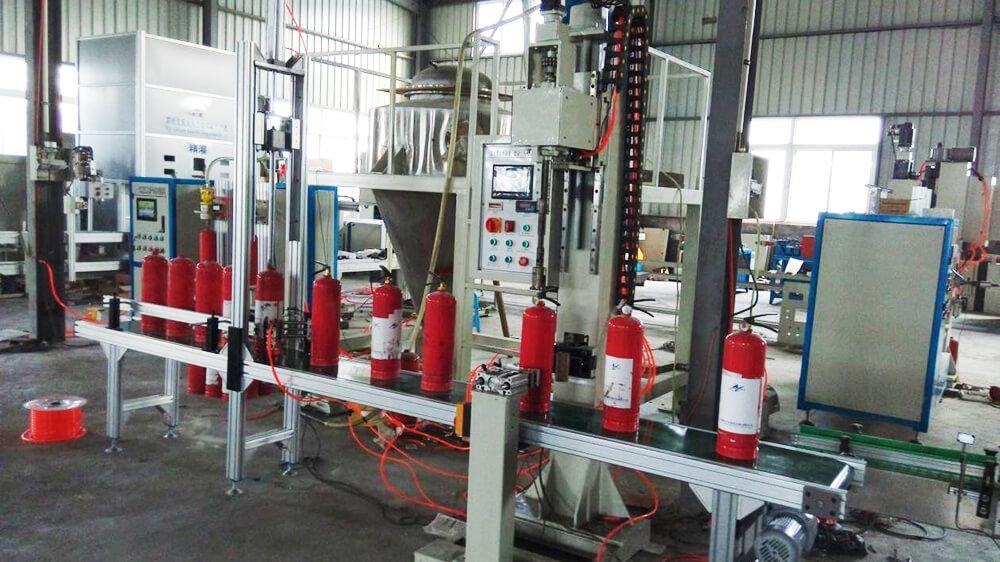
The Maintenance Schedule at a Glance
The intervals below are the baseline used by NFPA 10 in the United States, BS 5306-3 in the United Kingdom, and the civil defence regulations of most GCC countries. Local rules can require more frequent checks — always confirm with your local Civil Defence authority.
| Interval | What happens | Who does it |
|---|---|---|
| Monthly | Visual check: accessible, in green, pin and seal intact, no damage | Facility staff |
| Annually | Full external service, gauge and weight verification, hose and nozzle check | Certified technician |
| Every 5 years | Internal inspection for dry powder: discharge, check compaction, refill, recharge | Certified technician |
| Every 6 years | Hydrostatic test for stored-pressure dry powder and water cylinders | Certified test station |
| Every 12 years | Hydrostatic test for dry powder and water cylinders (subsequent cycles) | Certified test station |
| Every 5 to 10 years | Hydrostatic test for CO2 cylinders (varies by jurisdiction) | Certified test station |
| Every 3 to 5 years | Foam concentrate replacement | Certified technician |
| End of life | Retire the unit if the cylinder fails inspection or reaches manufacturer service life | Certified technician |
⚠️ Important: Intervals above reflect commonly cited standards. Civil defence authorities in the UAE, Saudi Arabia, Qatar and other GCC countries may impose shorter intervals or require specific inspection bodies. Always confirm with your local fire authority and keep documented evidence of every service — it is your protection in an insurance dispute.
Monthly Visual Inspection: What Staff Should Check
The monthly check is the cheapest insurance you will ever buy. It is supposed to take less than a minute per extinguisher and is normally done by trained facility staff, not a contractor.
- Location: The extinguisher is in its designated place, accessible, and not blocked.
- Pressure gauge: Needle in the green zone. If red, the unit has lost pressure and must be taken out of service.
- Pin and tamper seal: Both intact. A broken seal usually means the unit has been partially discharged or tampered with.
- Hose and nozzle: Unblocked, no cracks, fitted correctly.
- Body: No dents, deep rust, weld cracks, or leaks around the valve.
- Label and operating instructions: Legible. A faded label fails most civil defence inspections on the spot.
- Inspection tag: The previous month's check should already be marked. If it is not, the staff rotation is broken and needs fixing.
Annual Service: The Baseline Most Sites Get Wrong
Annual service is where most fire equipment programs quietly fail. The reason is simple: the visual check gives a false sense of security, and the deeper service is then skipped year after year. By the time a hydrostatic test is due, the cylinder has not been inspected in five years and the test reveals corrosion no one knew was there.
A proper annual service covers:
- External examination of the cylinder, valve, and all fittings.
- Gauge calibration check or replacement.
- Weighing the unit and comparing to the nameplate weight — significant loss indicates leakage.
- Hose continuity, nozzle condition, and O-ring replacement as needed.
- Verification of the last hydrostatic test stamp and next due date.
- Updating the inspection record and applying the service sticker.
The 5-Year Internal Inspection (Dry Powder)
Dry powder compacts and cakes over time, especially in warm climates like the GCC. A full discharge and recharge every five years is the standard fix and is required by both NFPA 10 and BS 5306. The service includes:
- Full discharge of the existing agent for re-use or safe disposal.
- Internal visual inspection of the cylinder for corrosion or pitting.
- Replacement of the valve O-rings, siphon tube and any worn parts.
- Refilling with fresh dry powder to the nameplate specification.
- Re-pressurising to the manufacturer's specification and verifying the gauge.
- Recording the service on the cylinder and in the asset register.
Foam concentrate: a separate clock
Foam concentrates have a shelf life that is normally shorter than the cylinder itself. Plan on replacing foam concentrate every 3 to 5 years. Storing foam in high-temperature conditions shortens the clock further.
Hydrostatic Testing: The Non-Negotiable Pressure Check
Hydrostatic testing pressurises the cylinder to well above its working pressure for a set period and checks for permanent expansion, leaks, or rupture. It is the only way to know the cylinder is still structurally sound.
When is it required?
| Cylinder type | First hydrostatic test | Subsequent cycle |
|---|---|---|
| Stored-pressure dry powder (ABC) | At 6 years from manufacture | Every 12 years |
| Stored-pressure water | At 6 years from manufacture | Every 12 years |
| CO2 (high-pressure) | At 5 years from manufacture | Every 5 to 10 years depending on jurisdiction |
| Wheeled dry powder | At 6 years from manufacture | Every 12 years |
What happens after a hydrostatic test?
- Pass: The test date and tester mark are permanently stamped on the cylinder, and the unit returns to service with a new test certificate.
- Fail: The cylinder is condemned, depressurised, and physically destroyed (usually by crushing) to prevent reuse. A condemned cylinder must never be returned to service, even if the failure was small.
Refill vs Replace: A Practical Decision Tree
Not every unit is worth recharging. The decision depends on the agent, the cylinder condition, and the relative cost of a new unit.
- Cylinder failed the hydrostatic test — replace.
- Visible deep corrosion, dents, or weld damage — replace.
- Valve damaged beyond economical repair — replace.
- Unit past manufacturer service life (typically 25 years for dry powder, 30 for CO2) — replace.
- Otherwise healthy, just overdue for service — refill and recharge.
For dry powder 1 kg to 12 kg units, replacement is often cheaper than refill once labour, agent cost, gauge replacement, and downtime are added up. For CO2, refilling is normally cheaper than replacement. For larger 25 kg and 50 kg wheeled extinguishers, refill is usually the better choice.
Documentation Your Civil Defence Inspector Will Want
- Inspection and service tag attached to each unit.
- Asset register listing every unit, location, agent type, manufacture date, and last service date.
- Service records from the certified technician for every annual, 5-year and hydrostatic event.
- Condemnation certificates for any retired cylinders.
- Technician's certification or licence to perform fire equipment servicing.
Without these records, even a fully serviced extinguisher is treated as out of service during a civil defence inspection. The paperwork matters as much as the cylinder.
Frequently Asked Questions
How often should a fire extinguisher be visually inspected?
Portable fire extinguishers should be visually inspected at least once per month. The check confirms the extinguisher is in its designated location, is accessible, has a charged pressure gauge reading in the green zone, has an intact tamper seal and pin, and shows no visible damage or corrosion. Monthly checks do not require a certified technician and are often done by facility staff.
How often should a fire extinguisher be professionally serviced?
Annual servicing is the baseline used by NFPA 10 in the United States, BS 5306 in the United Kingdom, and the civil defence regulations of most GCC countries. The annual service includes a full external check, gauge verification, hose and nozzle inspection, and confirmation of weight and pressure.
When does a fire extinguisher cylinder need a hydrostatic test?
For dry powder and water extinguishers, hydrostatic testing is commonly required at 6 years from manufacture for stored-pressure types and every 12 years thereafter. CO2 cylinders are usually tested every 5 to 10 years depending on the jurisdiction. Cylinders that fail the test must be withdrawn and destroyed or recycled. The test date must be stamped on the cylinder.
How long does dry powder last before it needs to be replaced?
Dry powder can settle and compact over time, especially in warm environments, which is why a full discharge and recharge is recommended every 5 years. Many regulators also require a complete internal inspection at the same interval. Foam concentrates have a typical shelf life of 3 to 5 years before replacement.
How do I know when to replace a fire extinguisher instead of recharging it?
Replace the unit if the cylinder is damaged, deeply corroded, dented, or has failed a hydrostatic test, or if the valve is damaged beyond repair. Most manufacturers also recommend retirement after 25 years of service for dry powder and water units, and 30 years for CO2. Cosmetic repainting and re-stamping is not a substitute for replacement when the cylinder is at end of life.
Refurbished Units with a Fresh Service History
FireGuard Trading supplies both new and refurbished fire extinguishers. Every refurbished unit we ship has been hydrostatically tested within the last 12 months, fitted with a new valve set, refilled with fresh dry powder or foam concentrate, re-pressurised, and re-stamped with the test date. The unit arrives with a fresh 5-year service window and the documentation civil defence inspectors expect.
If you are stocking refurb units for resale or for your own facilities, ask us about our bulk cylinder exchange programme.